
On our trip back to Madagascar, after having had a year furlough in the US,  we stopped in Switzerland. i still remember the lovely red houses, with flowers, shutters and all. the lovely lakes and mountains. it was beautiful!
but i also clearly remember what i think of now as “the massive flush.”
at this point in time my brother and i were curious middle schoolers. so when we came across a bathroom at whichever Swiss airport we were waiting to fly on from, we were quite mystified by something we hadn’t ever seen before–automatic flushing urinals. they were designed to sense a person’s presence and then flush when the person moved away. just a little exploration of this led us to realize there was a red beam of light that, when interrupted, made the device flush. before long we figured out that one could get the urinal to do this by simply breaking the beam with your hand!
and that’s when we got ourselves in trouble. there were about 20 of these urinals in a row and we realized one could run down by them, breaking one beam after another, in effect getting the whole room to flush almost at the same time! so we did this. what a roar it resulted in! how powerful we felt! so then we decided to try doing this with one of us following the other, running as fast as we could. little did we realize the lady sitting at the little table in front of the bathrooms was actually responsible for these bathrooms, as this was something we’d never seen before, either. so imagine our surprise as we started off down the row of urinals when she lumbered into view, totally blocking our escape from a room that was in the middle of double flushing, yelling at us in a language we’d never heard before, which was probably just as well, as she was not a happy lady. fortunately for us, her strategy was wrong and instead of just blocking the door, she came into the bathroom towards us, waving a mop in one hand and a spray bottle in the other. so i split right, my brother split left  and we ran as fast as we could by her and out the door, with the roar of our double massive flush in the background, one of us getting sprayed, the other spanked with the mop (she was good!). safely getting around the corner, we then had to quickly stop running and catch our breath as quickly as possible as our folks were just down the hall. arriving in front of them, both of us a bit winded and wet from our endeavors, our parents looked us over and asked, “What had happened?”
“Oh, nothing” we said.
When I was a lot younger than today, one of my friends who worked for Billy Graham (BG) back then, processing gifts that were sent to him,  told me about a lady who had sent BG a pair of socks, asking if BG could wear them while he was preaching in his upcoming Crusade in her city?
Some years later, when I was still quite young, the Bishop (think President in a Lutheran sort of way) of the ELCA (the Lutheran church we were members of and working for as missionaries at that time) had lunch with us one day. Now this would have been a very unusual event, except that my wife (and to a much lesser extent, I) ran the ELCA missionary guest house in Antananarivo, Madagascar, at the time, and he and his party were staying at it during a visit they were making to visit the Malagasy Lutheran Church. They had just flown into Madagascar from the US on a series of very long flights, so were exhausted, and to top it off, they had just found out that somewhere along the way someone had stolen all of the Bishop’s socks, which had been in an outer pocket of his suitcase. So they were asking us where they might be able to buy some new ones to replace the ones he’d lost? The answer was simple–there weren’t any stores that had his size in our city. So I got some of mine for him as our feet were about the same size (if I recall all I had were white athletic socks, as I didn’t use dark socks back in those days–OK, so I’m not a fashionista!).
 Trying to be funny, as I handed my socks to the Bishop, I told him the above story regarding Billy Graham’s gift of socks, asking him if he could wear my socks during his visit to Madagascar?
He didn’t laugh. At all.
Not my finest hour.
Several years ago I shared some reflections with colleagues at an organization I was leaving (not of my own volition) about how  sometimes life puts you on a path you had never planned on being on. To be saying this then and there was very painful, as it was one of the first steps I made to leave behind work I had hoped to be doing and a place I had hoped to be for a very long time. I did this, little knowing at that time, how this reality of being on different paths than those I’d planned, would continue to be true for me as I grew older.
Recently I’ve begun to have some problems with my lower legs and arms. It’s due to a form of neuropathy that’s the result of having what’s known as CMT (Charcot-Marie-Tooth) and at present, anyway, there’s not much to be done about it other than for me to “ride” along on its progression. Fortunately for me, this has been a slow process.
I also struggle with depression. This has been tougher. However, thanks to a great support team and a combination of meds that for now, anyway, are working well, I’m much better than I’ve been I’m very grateful to say.
Because of the combination of the above, I’ve now officially been classified as “disabled” by Minnesota WorkForce. Good news is this means I’ve qualified for additional assistance from them in finding a new job, something which has been a bit of a struggle for some time now.
More problematic for me is coming to grips with the reality that this is where I’m now at. You see it wasn’t in a list of my To Do’s. When I was encouraged to “hitch my wagon to a star!” way back in high school in Madagascar, I didn’t see this coming down the road.
In thinking back to what I could once do with my legs (and not do with my head), what a 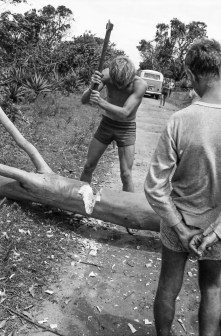 blessing that was! And how much I took it for granted!
On the one hand, I’m fortunate to not having had more problems sooner in my life as many people with either of these sorts of challenges frequently do. My reality is that for me both have shown up later in life.
And yet, here I am. The combination of things has progressed to the point that some things have changed. I am still mobile and can still get around fairly well, including not so long ago, much to my relief, on some of Madagascar’s country paths (though this with the help of leg braces–which I don’t yet require very often–and my trusty walking stick.
These changes mean for me it’s been a time of quite a bit of reflection, reassessment, learning and adjustments in a variety of areas, with, unless there are several major breakthroughs in medicine, more to come. And yes, there’s some mourning for things which are no longer the same, coupled with a gratefulness for things I can still do.
On the other hand, insofar as I’m approaching what for so many decades was that far off age of 60, things would be different for me by now anyway. It’s just that in my case they’re even a bit more different. Or maybe it’s being more different sooner?
But it’s also an opportunity to experience and better understand new things. In my case, sort of a preview of things to come, some of what many people will also experience as they grow older.
And in a funny sort of way, it’s an opportunity to start over with a new set of realities. In some ways a “new” me, if you will. So here I go…
Just don’t ask me to run!
If there’s something genetic or transmissible about teaching, I have it. A lot of it. Both my mom and dad were
 teachers, my brother was a teacher (now a school administrator), my wife was a teacher (also now a school administrator), two of my sister-in-laws either are or were teachers, my father-in-law was a teacher, my mother-in-law helped establish and run a preschool. And I have relatives in Norway who are teachers and school administrators, and the list goes on.
I, on the other hand, took a quite convoluted road to becoming a teacher as I spent quite a bit of time, money and energy working my way through both bachelors and masters programs in engineering (civil then agricultural). Marriage was squeezed in between finishing my Bachelors degree and then starting my Masters program. But then, suddenly, half-way through my masters degree I had a startling insight. I wasn’t interested in engineering as much as I was interested in the interface between engineering and people! I excitedly told this to my advisor who, with no excitement whatsoever, pointed out the window to the building behind him and said, “What you’re describing is Education, not Engineering. You’d do that over there in that building. [of all things, he was pointing to what was then the Agricultural Education department–see below.] You are half-way through your Masters degree so just get it done. And then you can figure out the ‘what comes next?’ part of it all.
While I wasn’t so happy with it at the time, it turned out to be great advice.
While I was finishing up my Masters program, I was asked by the Lutheran church in Madagascar to go work there as an engineer on a shallow well project it was just beginning. My wife and I talked it over and said yes. Except that my job changed before we even left the country. And then, about a year after having tried to work on this new project without much success, (as there were funds to do things around the country, but no funds to pay for the doing of them), it changed again! Except this time  it was this job ending, but there was no job to replace it. So within less than 2 years, I’d gone through 2 jobs. Not bad for someone in a
profession where we were being asked to work ourselves out of our jobs!
Except, what was I to do next?!
About this time I ended up getting hepatitis. Which meant about a month in bed (I was ‘fortunate’ to have a mild case). During that time I became more aware of a new focus of work within the global missions of the church I was working for (the American Lutheran Church that became part of the ELCA a few years later) which was ministry to the “poorest of the poor.” Without really having a clue as to what this meant, I felt called to be working on this. In so doing, I sort of backed into the field of education through training I started to do with the team of Malagasy colleagues I worked with. Blessed to be working with several very gifted Malagasy adult educators, along with several other very smart Malagasy technicians, we began to work with some of Madagascar’s poorest, those living at what were known as “Toby.” These were special villages which were set up by Christians to minister to Malagasy struggling with a variety of issues. Perhaps not surprisingly, in so doing, many of the people who lived and worked in these villages were very poor, with food, clean water, sanitation, etc. being something which was difficult to come by.
In so doing, we began to work with the Christian staff of these sites, many who had not been able to experience (much)  western education, so only had very basic, if any literacy skills. We quickly learned from more too much error within our trials that we needed some better nonformal adult education methods. Thus, I began my journey with Nonformal Adult Education. And once I started down that road, I was hooked. It totally redefined the rest of my work in Madagascar. It meant leaving engineering behind (and so, in the words of one of my friends, becoming “an engineer gone bad”!).
While we had access to some books on the subject (it was a this point when I was introduced to Paulo Freire), by far our best teachers were those we were working with. Who patiently worked with us, teaching us what did and didn’t work over and over again. Until we finally got it.
At which point they moved us on to the next lesson in their curriculum. [to be continued]
One of the intriguing things about learning another language is discovering some of the ways different languages handle  different things. In Malagasy, for example, there are two different ways of how one can say “us” or “ours.” The first is “antsika” which means “all of us (or ours).” In other words, “we” or “ours,” including you. The other way to say “us” or “ours” is “anay” as in “us (or ours), not including you.” In other words, “we” or “ours,” excluding you. So, for example, if you were at a potluck, putting out your jello for everyone to share you could say, “Feel free to have some of our jello.” As in, since it’s on the table with the cover off, while I brought it, feel free to dig in! “Ours” as in “antsika.” Or alternatively, if you were sitting in your brand new SUV with your family talking to your neighbor, you could say, “Yes, it’s ours!” where your neighbor would (or at least should) clearly get the message that while he can look at it, it’s not his to drive. Ever. “Ours” as in “anay!”
Personally, I, like many of you, was raised in a family and in a culture that at least tried to practice “antsika,” the inclusive form of “us” or “ours.” For example, there were many times we had unexpected guests at our dining or supper table. At times this meant more water in the soup or stew, at other times it was, “Don’t eat so much tonight, boys.” Or, when a hurricane roared through town, we, as the entire missionary community who were living near our boarding school, gathered together to help each other dry things out, board things up, replace roofs, etc. Yes, there were limits to this and we didn’t always do the best of it, but it’s what we sought to do. And generally, at least eventually, felt bad about it when we failed at this.
I am increasingly troubled by living in a world that seems more and more to be arguing (and moving towards) “we” and “ours” as “ANAY!” vs. “antsika.” We have gone from the  point where what the Statue of Liberty said (“Give me your tired, your poor…”) is what the US meant, to a time now where some would seem to be arguing these days our statue should be a giant wall with a mean looking border guard on top with his or her hands up saying, “Go back home to where you belong!” And not only that, but this overall perspective is being repeated internally in our US culture(s) as well. Indeed we have moved in many cases from “ANAY!” to just plain old “ME” and “MINE” is alive and well. We are increasingly acting like me having just about everything is absolutely not at all connected to so very many having so little or even nothing.
I’m at a point where I wish we had to own up in our language here in the US as to whether when saying “us” or “ours,” we’d have to either use “antsika” or “anay.” This in part as I hear too many folks these days not even being honest about it, implying “antsika” when they’re really meaning “anay.”
Within my own faith perspective, I believe much of it has to do with Jesus’ oh so simple and so very, very complex, even disturbing question, given how I believe we are hard-wired as people, of “And who is your neighbor?” A question I’ve seen folks struggle with in a variety of different countries and cultures. In many cases the problem is, “antsika” doesn’t get out much further than our immediate family. And in some situations, it doesn’t even reach out that far.
But it needs to.
Several weeks ago we watched two Senators from South Carolina who several years ago very publicly indicated they didn’t believe in what they called “big government” or “handouts” and so voted “ANAY!” against emergency funds for New York and other states back then, now plead for this same funding for their own state, as they were facing troubles. “ANAY!” becomes “antsika” when the chips are down. So at a minimum it’s hopefully pragmatic. As in, I need to be supporting you now in your time of trouble, as I may be in need of this same help from you at a later time. It’s one of the amazing things government can help do.
But I believe we’re also called to so much more than that. A whole lot more. From ancient history to the most current of events, our world is full of examples of those who were so focused on “ANAY!” (often eventually becoming “MINE!!”), while they often ended up very wealthy, they died almost alone, in many cases surrounded by all the stuff they’d amassed, none of which they could take with them. And there are also stories of those who moved from having been focused on “ANAY!” to “antsika” as well.
So come on folks, we need to not fall into the temptation of moving from “antsika” to “ANAY!” Indeed I believe we’re c(C)alled to do this, no matter in what or whom we believe.
In much, though not all, of this US society I now live in, being early is oh so much better than being on late (and in some  cases “on time” is viewed as late). However, even this can be over done. For example, this afternoon, without looking at my calendar, I hurried over to Augsburg College, where I at times teach, for a 1pm meeting. However, while I did find a meeting, in the right room even, it was not the one I was looking for, as this is actually happening 1 week from today. So I hung around for a half an hour, then headed off to my next appointment of the afternoon, this one on my calendar for today (the importance of planning ahead using your nifty electronic caldendar, right?). While I was trying to figure out when this event is actually happening, the person whose garage door I was parked in front who is also the one having the event, yeah, he came home, not leaving me time to sneak away. When I told him why I was there,
 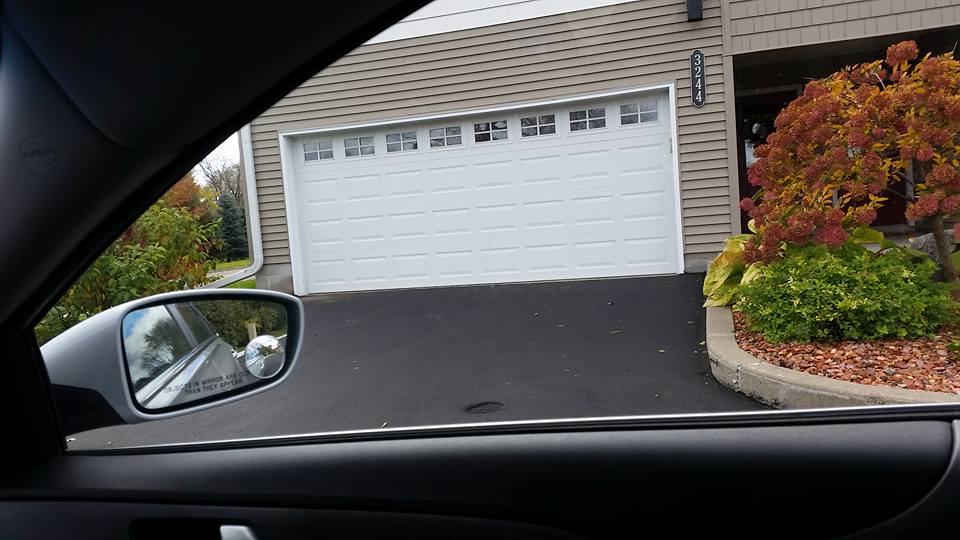 he told me I was 4 weeks early for this event. Oofta!
Now in my defense, Halloween is soon upon us. Being a qualitative sort of person, I was aware of urgent work my wife was doing for my granddaughter on her Halloween costume, thus making me assume it is Halloween today. Being someone who takes pride in my qualitative skills, I saw no need to check my calendar to verify that today was actually Halloween which is the day of the meeting at Augsburg. So off I went. Only to find out the urgency of my wife’s work on my granddaughter’s costume was for a Halloween hay ride today, 1 week before the actual Halloween day.
As for being 4 weeks early for the other event, no comment.
Did I mention I’m more of a qualitative kind of a person?!
It’s a long story I’ll share in one or more different posts, but my Junior year of high school in Madagascar we ended up  having to move out of our house while it was being rebuilt after a cyclone (hurricane) which took off the roof and most of the second floor. So we moved into a small house about a block away. However, as some of these old mission houses aged (and this little one was an old one), the weight of the house over time tended to push down the wooden pillars the house was built on on the ring of the house (under the walls), while those in the middle of the house didn’t settle, or at least not as much. This meant you ended up with floors which were up to several inches higher on the one side of a room than the other. This was the case with the house we moved into. It meant we ended up with a dining/.kitchen table that was an inch or two higher on the one side than the other. We soon learned that when we had company, my brothers and I needed to sit on the downhill side, as if anyone spilled water, it very quickly ran downhill. With a bit of practice and an impermeable oil cloth table cloth, we soon developed the skill to be able to quickly pull up the table cloth on our side to divert the water away from our laps.
This all was a distant memory I’d forgotten about and a skill I no longer realized I had until this weekend, when the waitress  at the restaurant we were at spilled a pretty good sized glass of ice water in my direction. Without even thinking about it and without stopping talking, I simply diverted the water with the menu in front of me. Not bad, I’d argue, since the above memory all happened about 40 years ago!
Do you have a tilted dining table? I have no problem sitting on the downhill side!
One of our favorite stories from when our kids were small happened one day when two of our kids’ friends were over visiting. This  meant 4 young ‘uns, 3 of them just over knee-high at that point in time, moving around our apartment in mysterious ways as we were living in a 2-story missionary apartment at the time and they lived just down the hall, so there was a lot of freedom of movement as they moved back and forth between our two apartments. I was at school, so my wife was trying to keep track of them all while taking care of our (very much no longer) wee one who wasn’t yet walking at that point. Let’s just say she was busy!
At one point they all gathered around my wife who was putting on some facial cream while our wee one was asleep. One of the friends asked my wife what she was doing? Her reply was, “I’m putting this on to make myself beautiful.” After a pause, while the friend gazed up at my wife intently, he very seriously said, “It not working!” No smile. Nothing. Let’s just say my wife was not impressed!
Oh, what children are able and willing to and do say! Enough to make one’s eyes water. At times, if you can’t laugh at it all, then maybe you cry.
Now my wife was then and is still beautiful, so I will politely beg to differ with our children’s friend at that time on this one. But, “It not working” is now a phrase I use often. For example when I:
- try something new in my teaching that clearly and quickly shows itself to not have been the great idea I thought it was, then “It not working!” becomes what I need to tell myself as I try to figure out what to do next?
- watch the current political debates, “It not working!” is perhaps too polite a response.
- tell my wife I will do something and then don’t get to it in a reasonable amount of time, my assessment of “It not working!” needs to be quickly followed by some urgent actions on my part (including an apology).
- remain hopeful that I’ll lose weight by not changing anything, well, “It not working!”
So as I disagree with that little one’s assessment of the situation at that time (he’s grown up to be a very fine young man), I 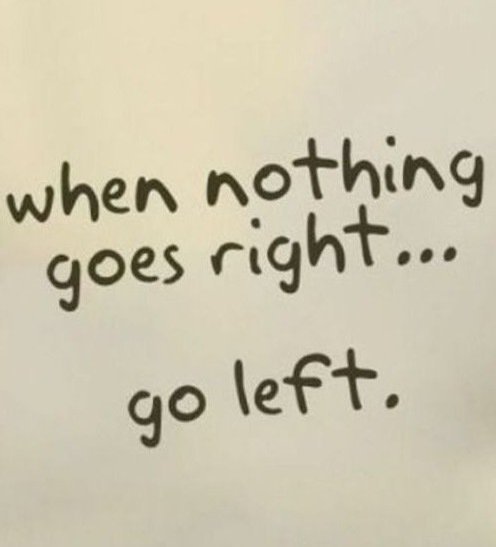 thank him for having provided me with a very helpful phrase that I’ve learned (often the hard way) I need to pull out and embrace when things clearly aren’t working.
And then, hopefully, figure out a better way to try to move forward. While it’s not always onward and upward, on my good days I remain hopeful. And on my bad days? See the “not always” phrase. But then, once I’ve been able to again see “It not working!” I have the opportunity to try something else. So if not at first, at least eventually onward and upward. And if not, well, there’s always sideways I guess.
As our kids were growing up, I would try to remember to stick my head in their rooms at night before they went to sleep to tell  them I loved them. In response I would often hear a gentle voice from one of our boys, quite young at the time, say, “I already knowed that, dado.” Such a reassuring response to me as a dad!
But as I’ve grown older, I’ve found these words have other applications, as well.
When I went back to school the last time, it was helpful in reminding me when preparing for an exam that as reassuring as it was to focus on reviewing the stuff I knew, I would do better in moving on to things I still needed to learn. I later found this helped me in the research and evaluation I conducted as well.
Or, if I’m busy teaching something, caught up in the excitement of it all, a student gently saying, “We already know that” is very helpful in encouraging me to move on to something which may not be quite as familiar and thus much more relevant to what we need  to be doing.
And just yesterday I realized that in our Lutheran worship service each Sunday, we start with a time of Confession and Forgiveness, one of my favorite parts of my faith. Because, in confessing my (many) failings to the good Lord, the reassuring response is always, “I already knew that and you are forgiven.” In a world where how I do and/or don’t respond to life can be so very self-deflating at (far too many) times, what a gift!
It was an interesting group to be a part of. We had all been “missionary kids” in quite a few different countries back in the day 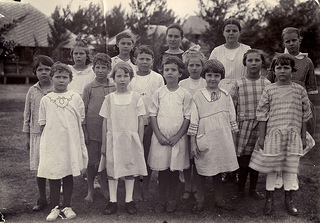 (we were all 30 or 40 somethings at this point) and had gathered to share some of our experiences. We were going around the circle introducing ourselves. The person to my right shared that she had grown up in Tanzania where her dad had been a missionary doctor and she had gone to a boarding school for missionary kids. She was working as an ER nurse out on the west coast. And then it was my turn. I indicated I had grown up in Madagascar where my parents had been teachers at a school for missionary kids so, while the school had a dormitory, I had lived at home.
“A station kid!” the people on either side of me said and picked up their chairs and moved them away from mine, leaving me alone at the end of the circle. As it turned out, the person to the left of me had grown up in Liberia where his dad had been a missionary pastor. He had also gone to a school for missionary kids. He had also lived in a dormitory that was part of that school.
I think all 3 of us were surprised by their reactions, as they were only partially joking. But it represented something deeper. Because their parents had lived and worked in towns some distance from the schools they went to, they had grown up in dormitories for missionary kids. Because my parents had taught at a school for missionary kids, I lived at home.
As well run as the dormitories were, it hadn’t always been easy living that far from home when you were in grade, middle or high school. And then there was the reality for some of heading back to the US to go to college while parents and siblings continued to living overseas. As I very inadequately understand it all, it was very complicated for some kids. And now, some 20 or more years later, they still felt it. And wanted to let me know I hadn’t been part of that experience.
 I’m now old enough to realize better just how complex this thing which Christians understand and respond to as “Calling” is. Something my parents responded to and something my wife and I responded to, both in going over to Madagascar and in coming home which felt much more like “home” to me for many years. It all leaves me with many questions. Some of which I probably won’t ever get answers to.
I’m reminded of that shared with me by a Malagasy colleague and friend of my parents who felt Called enough to pursue advanced theological education that he left family back in Madagascar for the duration of his studies here in the US. At a very difficult point in my family’s life, he came to visit us.
And said, “We must have faith.”
Indeed.
If only it were easier!
 tomberkas