
If leaving on a jet plane was both a sad and exciting thing to do (see my 8/28 blog), at the same time the final arrival at our final destination was a whole other thing.  Flying from Minneapolis, MN to Antananarivo, Madagascar takes awhile. Somewhere between 8 and 12 hours to get to Europe (depending on how much time you spend at the airport(s) en route, whether you land anywhere in between, etc.). Then it’s at least a few hours in Europe (though I much prefer getting off the plane, taking a shower and sleeping for awhile) before you get on another (series of) flight(s) to go from Europe to Madagascar, which is at least another 11 to 12 or so hours of flying, plus time spent in airport(s) along the way. Then you have to factor in how much you slept the week before you left the US, how many children are flying with you, their ages and temperaments, whether you can sleep on a plane, etc. Suffice it to say, while you can get there from here, it takes awhile. And so it was always such a relief to be able to get off the plane, knowing you’d gotten there!
Going through Antananarivo’s airport is its own form of torture, as spaces tend to be crowded, hot and the process is more than a little confusing, especially if you don’t speak any Malagasy or French (and even if you do, it’s a slow process). Once you do make it through hopefully your luggage arrived with you, someone from airport security will most likely want to see what’s in it and then you have to run a gauntlet of very eager taxi drivers, to hopefully get to someone who came to pick you up. Then it’s the ride into town where it’s clear you’re not in Kansas anymore, Toto (reference to Wizard of Oz if you haven’t heard that phrase before) and then it’s time to sleep for awhile.
And then, when you wake up, suddenly you realize you are there. Really there. When my wife and I first went to Madagascar (before kids) a long time ago (1982), after we’d had  showers, had slept awhile and had eaten a meal where we weren’t also flying along at 500mph, we looked at each other and said, “Well, that’s not so bad. If needed, it will only take about a day or so to get from here back to there.” And then we realized we had agreed to be in this new “here” for 3 years before we went home again. And we had flown in with one way tickets. Suddenly the “here” that had now become “there” seemed a lot further away!
So you’re (finally) there. After so much time, preparation, angst, excitement, etc., you made it! And then it hit me, “Now what?!” In my case, I had grown up where I was now back again. It had only been 6 years since I’d last left Madagascar as someone who had just finished high school. But now I 2 college degrees, a job related to them, was married and had no parents to take care of me! So I discovered it was a whole lot of starting overs. Learning how to shop, cook, clean, communicate, bank, get help if you’re sick, take taxis etc. while at the same time making new friends, in our case getting better acquainted with the Malagasy Lutheran Church (for whom we worked) and our new colleagues, Malagasy, American and Norwegian, in my case trying to figure out what I was going to do as what I’d been hired to do had changed twice already, learning how to speak Malagasy a whole lot better than I did, etc.. And somewhere in the midst of it all we were in the midst of what I knew very little about back then–the cycle of Culture Shock.

What had initially been fascinatingly different became just frustratingly different. So many things didn’t make sense, some didn’t even work (at least all the time–for example the electricity for the capital city of more than a million people we were living in went out every time we had a thunder storm). And learning a new language? “Oofta” is a polite word some of us here in Minnesota say in response to that whole experience.
And then, things started to make more sense as I slowly learned new ways of doing things. A lot of things did actually work, just in new ways, many of the things from back there (Minnesota) didn’t make much sense over here, there were fascinating new things to learn about and get used to and at least some of the most frustrating things you found workarounds for or just did your best to avoid or if that wasn’t possible, then ignore as best as possible. Now keep in mind I’m boiling at least 6 months time down into a few paragraphs, writing with a lot less drama than it felt like going through it all.
And that diagram of the “Culture Shock” and “Cross-Cultural Adjustment” process I included above? Note the mini-ups and downs in the midst of the bigger ups then downs then ups, as I found that to be true as well.
So if you’ve been through this in your own way(s) and time(s) and places, here’s to our memories of it all! To surviving it! And the valuable lessons learned. And the joyful times in between the times which weren’t so much that way. And the amazing world that unfolded as you began to make your way through it.
And if you’re just going through it, hang in there! My wife, who is much better at laughing and letting things roll off her back,  went through it all a lot more cheerfully than I did. So that option is possible. Or you can be like me and take the more grumpy, Eeyore (from Winnie the Pooh) route and that worked as well. Just not as much fun. In fact I don’t recommend this approach.
But whichever way you choose to go through it all, if there’s fun times in the midst of it all, enjoy them! And the painful parts? It’s part of the process. And it does get better! In fact what I hope and pray you’ll find is with time, it is worth it all. More than worth it!
And that’s all I have to say about that. At least for now.
It’s been 20 years now since we moved back to the US from Madagascar, where, by then, my wife and I had lived for almost 10 years. Living there  meant going there. And then coming back to the US for visits and a few study leaves. This was something I’d actually started doing a long time ago, back in 1966 when my family first moved to Madagascar. In those days it was flying in smoke-filled Air France DC-8s or 707s. Our first flight went from Minneapolis to New York to Paris to Djibouti (refueling) to Madagascar (my last flight there flew from Minneapolis to Paris direct then nonstop from Paris to Madagascar, an 11 hr flight). Then we got on a cold, drafty, rattly “Air Mad” DC-3, if you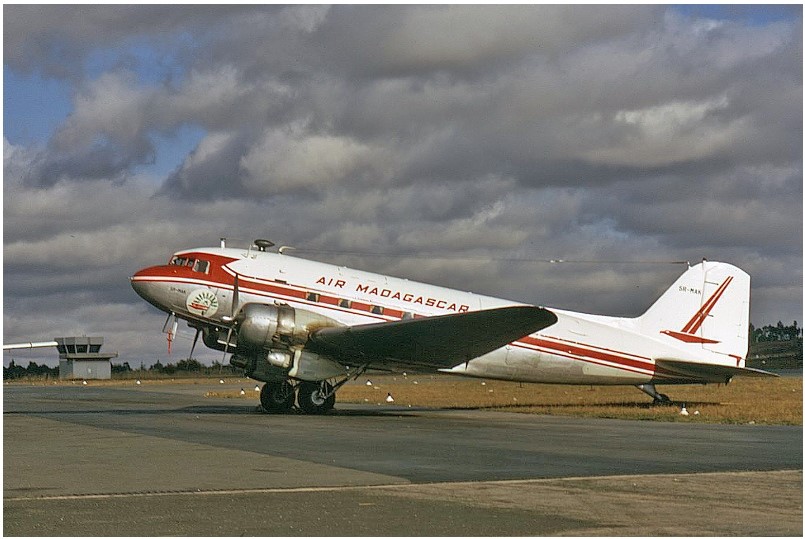
flight down to Fort Dauphin where we lived for the next 10 years.
Getting on a plane to do this when you’re actually moving there means saying goodbye to a lot of things. It was a lot simpler as a kid. As an adult it was hard to leave especially older family, not knowing if we’d see them again here on earth anyway. It also meant selling most of one’s things while trying to figure out what we did want/need to bring with us. And ending jobs, handing over keys, leaving where you’ve been living as well as all the people in your lives. Often final days were filled with saying goodbye to those who stopped by during the day while madly packing and sometimes purchasing at night. This was before “survivalists,” but we resembled them somewhat in terms of both what we bought and how much of it we bought at the same time (our first length of time overseas when I was a kid was for 5 years, not even getting up to Madagascar’s capital city during that time. When my wife and I left for the first time it was for 3 years, though we did get over to Nairobi once.
Leaving stuff behind? Once I had gotten on the plane and didn’t have to sort, pick and choose them anymore, that was actually a big relief.
Leaving jobs behind? That was easier for me than my wife, as I had just finished grad school the first time we went and was going to a job I was very excited about in a country I’d grown up in. For my wife, however, it meant leaving her teaching career, which she had been very much enjoying, and going over to a place she had never been before, where the language is mostly Malagasy (some French, at least then very little English) and at least initially there weren’t any jobs she could do.
One of the toughest parts of it all was leaving family and friends. And that never got any easier. But then, again, I’m not sure I would have wanted it to. Those were very special folks I was saying goodbye to.
And at first when we got to over there, while it was fun in many ways to be back to my “home” on that side of the ocean, most everything was new. While I had lived in Madagascar for 9 years growing up, being an adult there was a very different experience. And at first things are so inefficient, with almost everything initially taking 2 or even 3 times as long as they did from where you came from (interestingly, this was true when we moved from Madagascar back to the US as well). That is, if you can figure out how to even do it! There is way too much time for frustration and questions about why you decided to make this move! But then slowly (at least for me), things begin to start making sense again. Generally in some new and quite interesting, sometimes simpler, sometimes much more complicated (and yes, at times exasperating) ways.
So here’s to all of you making that transition! There are those of us who have done this before you. And survived it all. And though it took awhile, we actually thrived.
Give it time, it does get better. In fact it can be an incredible, life-changing blessing, as that’s what it was for me both growing up and then working in Madagascar as an adult. And yes, there were some tough times as well. But as I’ve grown older, I’ve come to realize that’s just part of life. No matter where you’re living. So give it time. And enjoy! You’ve embarked on an amazing journey!
Not so many days after my brother and I came close to walking on water as we fled the shark that popped up out of the water (see previous post titled “swimming with a shark–literally“), we were on a bike ride to Manantenina, 100 km north of Fort Dauphin/Tolagnaro. It was the end of December which is a very hot and humid time of year in that part of the world (about as far south of equator as Miami is north of it). So we decided to break the trip up into a day and a half and left mid-afternoon from Fort Dauphin, planning to sleep in a small village along the road for the night. The road to Manantenina was then (and is still) unpaved, with 5 <<bacs>> which are small ferries for the rivers too big to have a bridge, that can carry up to two Land Rovers or a big truck (see below picture). In those days, anyway (mid-1970s), none of these had motors, so were pulled across the river by hand, using a cable strung across the river which the men who manned the bacs pulled on to get everyone across the river. However, it had taken longer to get to the first bac than we had planned, so night was coming fast and unfortunately the bac was on the far side of the river, with no one around to pull it across for us. We called for someone, but no one responded (the normal method of summoning help was to honk your horn, but we didn’t have one of those). So I offered to swim across the river to get the bac.
As I got ready to jump in, I wondered about what I had offered to do. While the river wasn’t so wide, the water wa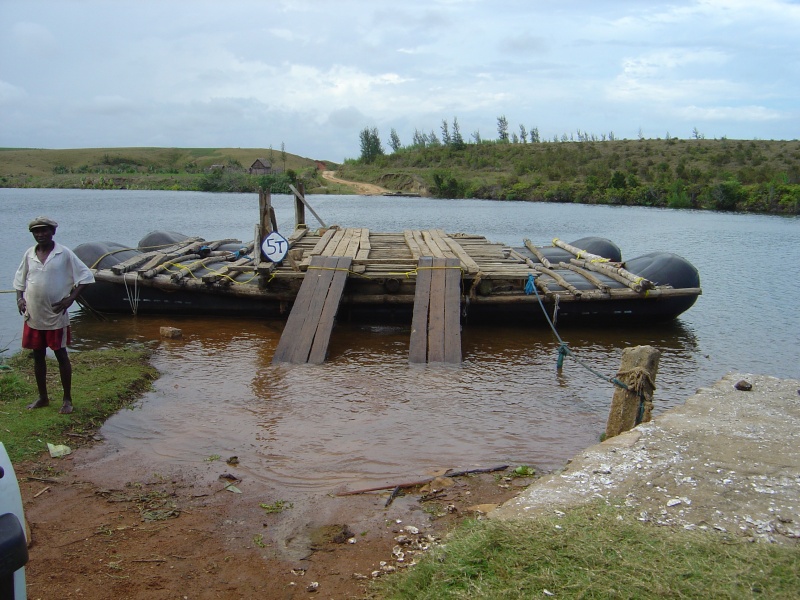 s quite dark anyway and with the sun having gone down that close to the tropics, there wasn’t a lot of dusk, so it was quickly getting dark. There were also some creepy looking plants on both sides of the river. But as we didn’t have camping equipment, we needed to get across the river to see if the small village just up the hill from this bac had a guest house we could use for the night, as it looked like rain would soon be upon us.
So I started to swim across the river, faster than normal, as it was all a bit spooky. Getting closer to the other side, I thought this was all going to be OK when something brushed up against my legs. Pretending to not have felt it, I kept going, but then felt it again. And suddenly I was swimming at a pace to break my fastest time ever! Getting to the river bank, I gratefully crawled out and decided not to offer to swim across to get a bac at night again!
The next day, as we went across rivers on the other 4 bacs there are on that road and then, a couple days later on the way home when we did all 5 of them in one day, it was sunny and hot. So we jumped into each of the rivers from the bac as it slowly moved across the river and swam alongside, thankful for the cool water. And every time we did this the men pulling us and our bikes and stuff across the river would say, <<Tandremo ny voay!>> We knew what <<tandremo>> went, it was Malagasy for “beware!”, so they were warning us about something. But none of us knew what the word <<voay>> meant? When asked to describe it, the men would tell us about what sounded like a pretty big <<fia>> (“fish”) with a bunch of teeth. So we kept a look out for them, but continued to swim, never actually seeing these strange fish we’d never heard of before.
So you can imagine our surprise when, having returned safely to Fort Dauphin, and asking what the word <<voay>> actually meant–as in what kind of fish was this with all the teeth we had been warned about?–you can imagine our surprise to find out it was the Malagasy word for “crocodile!” Beware indeed!
We decided if we ever did that trip again, we’d forego jumping into any of those rivers!
If there’s something genetic or transmissible about teaching, I have it. A lot of it. Both my mom and dad were teachers, my brother was a teacher (now a school administrator), my wife was a teacher (also  now a school administrator), two of my sister-in-laws either are or were teachers, one of my brother-in-laws greatly enjoys tutoring he does as a volunteer, my father-in-law was a teacher, my mother-in-law helped establish and run a preschool. And I have relatives in Norway who are teachers and school administrators, and the list goes on.
I’ve been blessed in life to have been able to learn from and sometimes help a variety of gifted teachers. This included my dad, who, because I was going to a very small school for missionary and other Third Culture Kids, was my English teacher every year of my time in high school. I have been told multiple times by classmates from that school that they still feel my father was (one of) the best teacher they ever had in their education, almost every one who has gone through college, quite a few through grad school. Did his teaching gifts pass on down to me? I wish!
I took a quite convoluted road to becoming a teacher as I spent quite a bit of time, money and energy working my way through both bachelors and masters programs in engineering. But then, suddenly, half-way through my masters degree I had a startling insight. I wasn’t interested in engineering as I was interested in the interface between engineering and people! I excitedly told this to my advisor who, with no excitement whatsoever pointed to the building behind him out the window and said, “That’s education. You’d do that over there in that building. You are half-way through your Masters degree so just finish it. And then you can figure out the ‘what comes next?’ part of it all. It turned out to be great advice.
I sort of backed into the field of education through training I started to do. With several very gifted Malagasy educators from whom I learned an enormous amount of things, working with very smart Malagasy people, many who had not been able to experience a western education do didn’t have literacy skills, also from whom I learned a great deal. And once I started down that road of trying to be involved in helping people learn, I was hooked.
I ended going back to school again and actually ended up in the department in the other building my engineering advisor had pointed to 10 years earlier. While the road was a bit (too) confusing for awhile, it’s now been 15 years that I’ve been seeking to earn a living in higher education, in the “academy” if you will. Or at least on its fringes.
I’d love to write of all my accomplishments doing this, but the pathway has been a bit more complicated than that. In fact it has led from several years of part-time to 10 years of full-time to now 5 years and counting of part-time teaching. Let’s just say that for me, anyway, higher education has proved to be a many splendored thing. While my hope 15 years ago, when I started a tenure track position, was to have been securely tenured and hopefully promoted by now, that did not turn out to be my story. But I still teach. Or try hard to. When people ask me if I teach, I often answer, “Allegedly–not all my students would agree with this statement!” Even the students who appreciate my efforts are more than willing to share with me areas I’m not as strong in–a question I ask up to several times each course I teach. And with by now a lot of students’ input, I have gotten better. Much more slowly than I’d prefer, but moving in the right direction.
For me it’s been much more of learning an evolving art than a practice, achieving better results through lots of trial that ends up with too much error! But then as a master teacher/trainer who I respect greatly just shared on a Facebook post,
“In Nobel Prize-Winning Physicist Niels Bohr’s words: ‘An expert is someone who has made all possible mistakes in one field and there are no more to make.’ A lot of us are closing in on that elusive goal!!!!”
As Parker Palmer (2007), one of the most influential educators I know, describes in his book, The Courage to Teach,
“there are times in the classroom when I can hardly hold the joy…[when] teaching is the finest work I know. But at other moments…my claim to be a teacher seems a transparent sham…this occult art–harder to divine than tea leaves and impossible for mortals to do even passably well!” (pp. 1-2).
The irony of it all is, as with many people, if you put heart and soul into an effort you (mostly) love and feel called to for an extended period of time, learn from what doesn’t work, work with what does, you get better at it. I am in fact doing some of my best teaching these days. In my case it all started for me in Madagascar, slowly figuring out how to provide very high quality learning opportunities to some very poor folks sitting on woven mats outside, under the shade of the biggest tree around (generally a mango tree), no electricity for miles. Some of them people who really had no time to waste, as they were living that close to the edge of survival. It has evolved to the realities of technology equipped higher education classrooms, multiple learning management systems (Blackboard and Moodle for example) and some fairly complex online learning opportunities and challenges, all related to the fields of leadership and management. Mostly for smart, experienced and way too busy graduate students who are also working full-time as they work on their Masters degree(s). And at times, even with folks located around the world.
So for me helping people learn valuable things is my calling. And it is also like what Palmer describes above. And, like I experienced with my calling to work some of Madagascar’s “poorest of the poor,” there are joys, yes, many of them. And there are also sorrows, more than I wish. But I keep on trying to learn from them, to make use of the concept of “mo’ bettah.” That as I move forward, I continue to get better. And if not, then it’s time to find something else to do.
But till then, I, like so many in my family, am a teacher.
I helped someone the other day get to and from a doctor’s follow-up appointment. They had had a fairly complex surgical  procedure done that, for a variety of reasons, has taken awhile to recover from. But they are doing oh so much better now. As I mostly just drove them to and from (ain’t no one asking for my type of doctoral expertise for this sort of thing, nor should they!), I had time to reflect a bit on the whole concept of getting used to feeling more normal again, as this was part of the transition this person was going through as they slowly healed from their surgery.
I’m old enough now to have had several times when things weren’t normal for some time and it took some time to get back there. For example both times I’ve had hepatitis (which I don’t recommend even doing once) it didn’t take very long at all to get quite sick and lose a lot of weight. The recovery, on the other hand, was a whole different journey. It was much easier to proclaim I was back to normal than it was to actually get there.
Not unlike many of those approaching their 60s (how is that even possible?!), “being healthy” is in an interesting process of evolving, in at least some ways it feels, more rapidly than it did for awhile. As in what “health” means to me now is oh so different than what it meant back in my youth. And it means getting old enough to find out some of the more mysterious aspects of how one’s body is deciding to do things now at this point in time. So in my own ways I’m presently at a point where I’m working on the whole concept of learning what “feeling more normal” for me means. What do I still have from days of old? And what do I need to realize I may have had to say goodbye to, in some cases, now quite a few years ago? And what are some of the new aspects to this new “normal”? Wise people tell me to take my time, be patient, go with the flow, etc. And that is wisdom. I’m just not very good at and/or patient with it.
But I really don’t have that much of a choice. So here’s to doing better with the wisdom I’m given.
it happened again. last Wednesday the lovely young lady our son has been dating left for her home and is now with our son and about 70 other young adults in  Chicago, as they work on getting ready for their overseas assignments. so when she left, it was for a year. and then on Sunday we took our son (her boyfriend) to the airport to see him pass through security and then disappear to the land beyond site of those of us without tickets to somewhere else. it was hard. it is hard.
i’ve had some people tell me that doing this must be easier since we went overseas ourselves. so is it easier? or is it harder? the answer for me to these two questions is “yes.” easier in that we probably have a bit better sense of where they’re headed and at least some of what they’ll experience, including some pretty amazing experiences. and harder for all the same reasons. (it’s also not necessarily easier for me insofar as what i’m good at is the going part of it all, not in staying here! as my wife said as we walked back to our car, “it was easier when we were the ones leaving,” which for me, again is both true and false)
in saying this goodbye i’ve realized for the first time that one of the things i tend to do with the part of my life that was in Madagascar is to focus, probably way too much, on the good, even best of memories. and yet in sending off those i love, i probably squeeze together too many of the tough things involved in it all. and so neither of these perspectives are really fair, as, while i feel very blessed for every one of my almost 20 years growing up and then working in Madagascar, it wasn’t all good times. and while some times were hard, these tough experiences, after we’d made some big adjustments upon arrival in Madagascar, which took awhile, tended to be intermittent.
so goodbye, loved ones! we have some sense of what you’re doing and probably even a better sense of all we don’t know about what you’ll be experiencing. God’s speed and blessing you two!
As life continues to move along, one of the things I’ve come to realize is there is both excitement and dangers which come when one is dancing on the edge of life. Think in terms of log rolling, something I’ll never do in re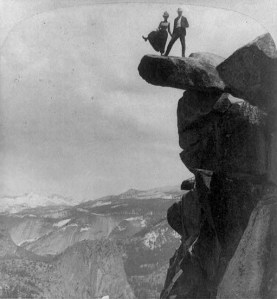 al life, but I’ve had times when this is how life has felt. Work, for example, at times has felt like a matter of trying to keep the feet moving as fast as the log, which in turn, can actually speed up how fast the log is rolling (if you stumble, it may even change direction!). Eventually there’s a good chance you’re going to roll right off the log and into the water.
Or anothe r example is when we were busy raising our kids when they were much smaller. After awhile when we were out with them at some function for supper, generally my wife and/or I could actually sense our kids beginning to “dance towards the edge” in such a way that not getting them home and to bed and quickly generally meant we were going to have a major meltdown. Sometimes, if we weren’t proactive enough, we’d avoid having it wherever we had been, but then have it when we got home as everyone was getting ready for bed. All of which taught us to try and avoid this the next time out.
Nowadays my feet don’t move like they used to, so it’s not so much dancing which I do. More of a shuffling. Or at times just a bit of bending at the knees. And life has thrown some new things into my life which means I need to try to avoid too much “edge” time. Which actually I think is more how life should be. As I’ve learned some kinds of excitement are dramatically over-rated. And the dangers of some edges are quite great.
One of the areas of expertise I’ve developed in life (think the 10,000 hours rule) relates to outhouses. In Malagasy, the new word for this was <<lava-piringa>>, but most people used the French terms of “WC” or “cabinet” (see above, as  this is what I was “Chef“–French for “Chief”–of). In fact, at one point in time I claimed to be one Madagascar’s leading experts on outhouses. Which I followed up by saying, “Primarily because no one else was interested in them.” At least at that time.
And in this case, I can claim some expertise, which started with a Bachelors of Civil Engineering, where I focused on Water and Sanitation. This was followed by a Masters in Agricultural Engineering, where I looked at what in the 1980s was called “Appropriate Technology.” Which included outhouses. In fact, back in those days the World Bank was hooking up instrumentation to what they called “VIP” (Ventilated Improved Pit) Latrines, with the ventilation (and thus reduced smell) coming from a vent pipe (see drawing to right). The instrumentation was used to measure air flow, how many flies were caught by the screen on the end of the vent, etc.
All of which is why one day, on the outskirts of Vangaindrano, a small town on the east coast of Madagascar, I ended up in the bottom of a hole that had been rapidly getting deeper until I’d grabbed the shovel and
 jumped in. Having shoveled enough to entertain the whole village which was watching our efforts to build several latrines for the Toby (I’ll write more about these later), I crawled out of the hole to let the next person in. Standing by the hole was an elder, an older man who had seen much in his life. He was still laughing at my efforts, but then said something I’ll never forget: “The French forced us to dig latrines. At gunpoint. As in, they pointed guns at us and said, ‘Dig!’ It’s nice to see you folks are using a different method.”
Wow! Talk about contrasting methods of how to “encourage” change!
Which was just one of many lessons I had on the necessity of listening to my elders.
[to be continued]
Growing up in Fort Dauphin, Madagascar, down on the southeastern tip, we were blessed with miles and miles and miles of white sandy beaches stretching northeast and southwest. Close your eyes and put your finger on a spot of coastline and 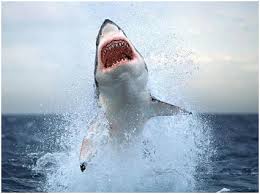 you’ll find it to be absolutely beautiful. This meant for a lot of variety when it came to swimming. There were the beaches where you didn’t swim as there were sharks, those where you could swim or snorkel, those better for body-surfing, etc. And in those days, most of the time you had the beach and swimming all to yourself.
The bay near Italy (pronounced eetalee), a very small town (not the country) not so far from where we lived, was one of the places we’d sometimes go to for picnics about 35 km to the west of where we lived. Driving west on the only paved road in those days, you’d leave the road at Manambaro, some 25 km west and head towards the coast on a dirt road that wound over dry hills, rice paddies in the lowlands and occasional villages. We’d often ride in the back of the pickup truck that served as the school “bus” (it wasn’t a very big school), either sitting in the back or standing behind the cab, letting the wind blow through your ears. Hotter and quite a bit drier than Fort Dauphin, the village of Itay was located just up from a gorgeous bay with a white sand beach (I only recently found out this was where early explorers anchored their ships when passing by, some 500 years ago).
We had gone there for a picnic and rather just splash in the shallows, what we’d done when younger, my brother and I had decided to swim out further to see if we could body surf some beautiful waves coming in, one after the other. Sheltered from the wind, the ocean was a glassy green with nary a ripple. Just gorgeous waves rolling in nonstop. As we got out further, it got a bit tricky because to get out far enough to catch a wave, you had to go out deeper than you could touch, which made it a bit more difficult to navigate with the waves rolling in. Also, as we swam out, it seemed the waves were always just a bit further out then we were.
So you can imagine our surprise when all of a sudden a shark came popping up, pretty much straight out of the water, not nearly far enough away from where we were. Evidently it had come in to see what these strange looking big “fish” were and had gotten nervous when the waves came rolling in.
As for my brother and I? After verifying that it seemed to be heading back out to deeper water, we came close to walking on it on our way back to shore. No more body surfing in that bay. At least for us.
[and no, the shark we saw wasn’t anywhere close to the size of the one in the picture, but for my brother and I, out there in the bay that day, it most definitely was]
Having crossed the ocean to live as I was going into 3rd grade (as a missionary kid type of TCK to Madagascar in ’66), going into 8th grade (back to the US), going into 9th grade (back to Madagascar), going into college (back to the US in ’76)–with annual goodbyes in Madagascar from ’66 to ’76 of those folks we’d shared som e time with who were not coming back to Madagascar–then as a young, married adult 6 years later (as missionaries what for me was back to Madagascar the end of ’82), to the US for a year some 5 years after that (with our first child who’d been born in Madagascar while we there), back to Madagascar a year after that (by this time with 2 kids), back to the US 2 years later, back to Madagascar 3 years after that (with 3 kids), back to the US 2 years later and then in four visits and counting to Madagascar, you’d think I would be pretty good at saying goodbye. NOT! (you can Google what this means if you weren’t using it 25 years ago–yes, it’s been that long!!). In fact I think in some ways the more I’ve had to say goodbye, the poorer I get at it.
Part of it has to do with the reality that I’ve been blessed with a lot of folks and places and things I’ve done that I’ve really enjoyed. So I guess as I think about it, I am fortunate to not have a longer list of things I’ve really wanted to and enjoyed saying goodbye to.
Another part of it has to do with what you grow to realize are the at least short-term finality (see below) of so many goodbyes. Dear folks you’ve greatly enjoyed who are leaving your life and you may not see again. Or in cases where do you get to reconnect, it’s just for a brief period of time.
And a lot of it has to do with the reality that I just don’t enjoy saying goodbye. As a pretty strong introvert, friends take awhile to make and I don’t generally have so many of them. So a goodbye leaves a pretty significant hole in my world. Part of it is in growing to realize the ending to something special that I may not have realized enough at the time that so many goodbyes mean.
And so as I’m getting ready to say goodbye to our son, who will be spending a year volunteering in Cambodia, and his girlfriend, who will be spending a year volunteering in England, it brings a whole new awareness of the goodbyes my family has said to me as we went overseas, most of the time for a lot longer than a year.
And even as I write this, I am encouraged by the other way of saying goodbye in the Malagasy language. One way is to say<<veloma>> which is goodbye. But another way is to say <<mandrapihaona>> which is “till we meet again!” With a strong belief that this is the way it will be.
Yet another blessing from my Malagasy sisters and brothers and their culture(s) and language(s).
 tomberkas